A Touro Summer Adventure in Rome
Lander College for Women Alum and New York Medical College Student Bracha Gluck Reflects on Living Jewish History
For more than two millennia, the Jewish community of Rome has endured, leaving its legacy carved into the stones of the Eternal City. This summer, students from Touro’s Lander College for Women stepped out of the classroom and into this living history, embarking on an intensive nine-day journey to uncover Rome's Jewish past and present. Designed to immerse students in Jewish history, culture, and heritage, the program combined classroom learning with firsthand experiences at historic sites, archives, and museums.
One of the primary goals of Touro's summer courses is to foster an appreciation for different cultures and societies through immersive experiences that simply cannot be replicated in a classroom, according to Dr. Toba Singer, Associate Dean of Touro’s Lander College for Women, who served as faculty on the program.
Professor Dana Fishkin, Associate Dean of Touro’s Graduate School of Jewish Studies, who lectured on the summer program, shared a similar vision, hoping students would leave with "a deeper appreciation for the diversity and resilience of Jewish life across time and place, a stronger understanding of the historical roots of contemporary Jewish communities, and greater confidence navigating unfamiliar environments." For many participants, she noted, this was also their first opportunity to engage directly with archives, works of art, and archaeological sites.
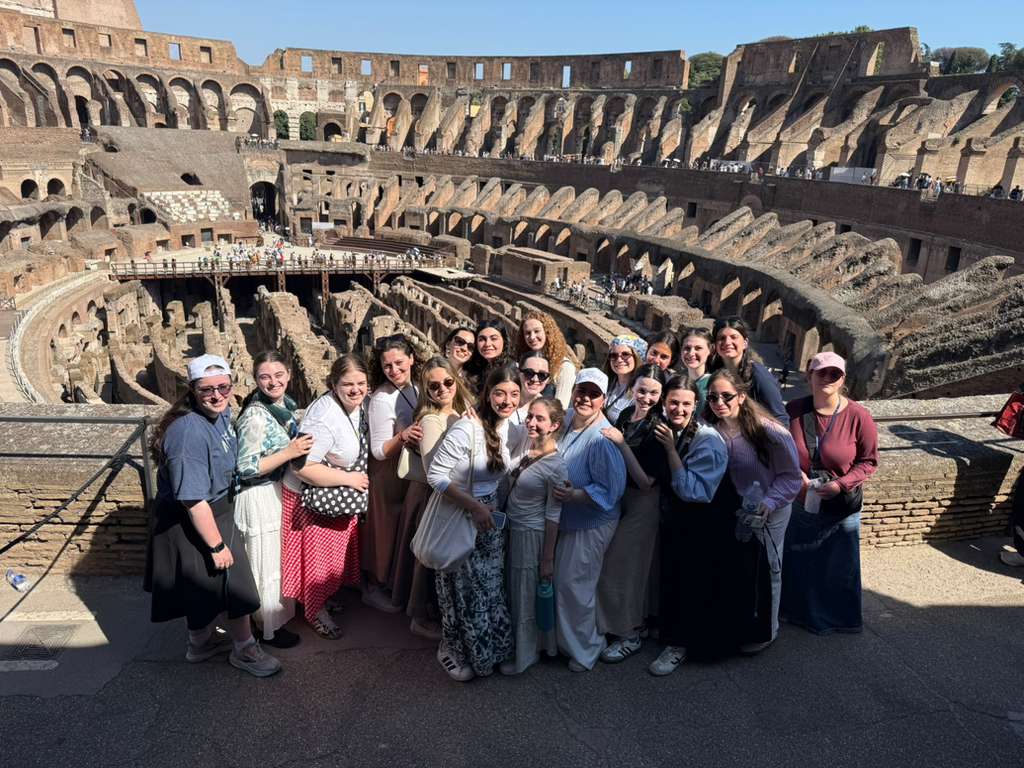
That vision came to life from the moment we arrived in Rome. We attended lectures exploring Torah themes related to Rome's history and explored the city's remarkable Jewish heritage, beginning with visits to the Jewish Archives, the Jewish Museum and the Great Synagogue. These experiences introduced us to the rich history of Rome's Jewish community and its enduring connection to the city. We also visited many of Rome's most famous landmarks, including the Colosseum, where we were treated to a fascinating tour highlighting the often-overlooked Jewish aspects of its history.
Our visits were enriched by lectures that provided historical context. Lecturers included Touro President Dr. Alan Kadish and Clelia Piperno, Director of the Babylonian Talmud Translation Project, who also provided significant funding for the program. Many of the lectures introduced us to influential Italian Jewish figures such as Rabbi Nathan of Rome, whose work appears in the Gemara, and the medieval poet and commentator Immanuel of Rome. We also examined the long history of antisemitism faced by Roman Jews and had the privilege of hearing from Dr. Monique Sasson, Vice President of the Union of Jewish Communities of Italy, who discussed how the community continues to confront antisemitism today.
Roots of Antisemitism, Seeds of Jewish Resilience
The lessons extended well beyond our scheduled itinerary. During our free time, many of us found ourselves seeking out additional pieces of Rome's Jewish past, whether searching for the plaque commemorating the burning of the Talmud in Campo de' Fiori or locating Rabbi Nathan's house in Trastevere. One of my favorite experiences was our visit to the Corsini Gallery, where we discovered beautifully painted ceilings depicting stories from Tanakh. Remembering what our guide, Dr. Marco Misano, had taught us about the ways biblical narratives were sometimes distorted in Christian art to promote antisemitic messages gave these works deeper meaning.
For many students, the trip offered moments of profound personal reflection. Emily Gorbacz described visiting the Jewish catacombs as one of the most meaningful experiences of the program because it illustrated both the depth and the challenges of Jewish life in Rome.
"Seeing firsthand the challenges and hardships that the Jewish people endured throughout history made me appreciate our resilience even more," she said. "This trip has inspired me to continue our legacy and pass down our values, tradition, and culture to future generations."
Rachelli Gross found herself returning to the theme of Vehi She'amda throughout the journey. "Being in places where Jews were once oppressed and afraid made me grateful that I can live openly and proudly as a Jew," she reflected. "Standing at the Arch of Titus and davening at the ruins of the ancient shul in Ostia Antica felt incredibly powerful. The trip made me realize how connected I am to that same mesorah and Torah that has been passed down through every generation."
Throughout the trip, I found myself thinking more critically about the way history is remembered and presented. I returned home with a deeper understanding of both the historical roots of antisemitism and the remarkable resilience of the Jewish people. More than anything, the experience taught me to recognize the layers of Jewish history and culture that exist all around us.
The people I shared the experience with made the journey even more meaningful. Sarah Piskun reflected not only on seeing Rome through a distinctly Jewish lens but also on the friendships formed along the way.
"I also met an amazing group of girls and made so many close friends," she said. "I went on the trip expecting to earn history credits, but I left with unforgettable memories, incredible friendships, and experiences I'll carry with me forever."
I couldn’t agree more. I arrived in Rome not knowing a single person, and over the course of nine days, formed friendships with thoughtful, inspiring young women that I am confident will last far beyond this trip. Exploring Rome was unforgettable, but what made the experience truly special was discovering its rich Jewish history alongside friends who transformed this academic program into a lifelong memory.
